
Sliding Folding Partition vs Glass Partition – Which is Better?
Acoustic Blog
Sliding Folding Partition vs Glass Partition – Choosing the Right Solution for Modern Spaces
Understanding Modern Partition Needs in Commercial Spaces
Modern commercial interiors are no longer limited to fixed walls and rigid layouts. Today’s offices, hotels, and institutional spaces demand environments that can adapt,
evolve, and perform efficiently throughout the day. Businesses are now focusing on creating spaces that support collaboration, ensure privacy, and maintain a strong visual
appeal at the same time. This shift has significantly increased the demand for advanced partition systems.
Among the most popular choices are sliding folding partitions and glass partition systems. While both solutions are designed to divide space,
their purpose and performance differ significantly. Choosing the right system is not just about aesthetics—it directly affects how efficiently a
space functions and how comfortable it feels for users.
What is a Sliding Folding Partition System?
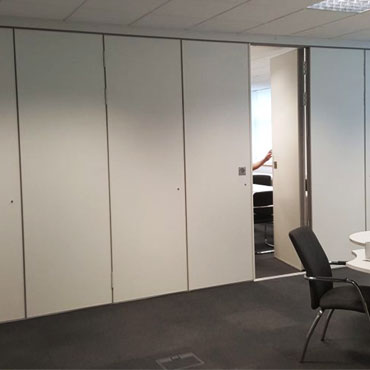
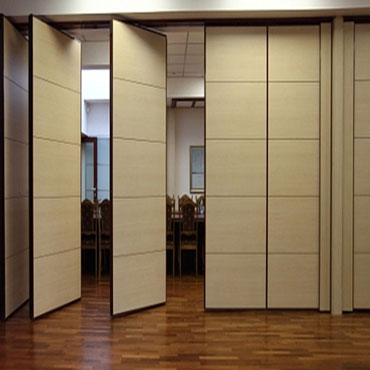
Sliding folding partitions are designed to bring flexibility into interior spaces. These systems allow large areas to be divided into smaller functional zones or opened completely whenever required. This makes them highly suitable for spaces where layouts need to change frequently. In environments such as conference rooms, banquet halls, and training centres, flexibility becomes a necessity rather than a luxury. Systems like acoustic sliding folding partitions offer the added advantage of sound insulation, ensuring that multiple activities can take place simultaneously without interference. Their smooth operation and space-saving design make them a practical solution for dynamic commercial environments.
What is a Glass Partition System?
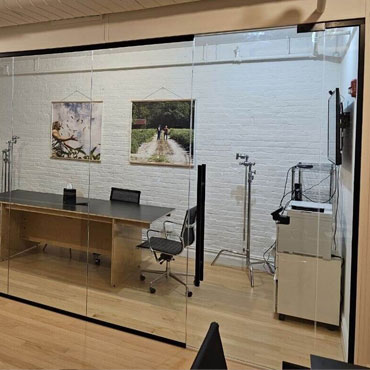
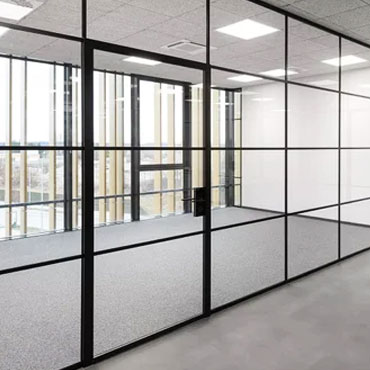
Glass partition systems are primarily used to create modern, open, and visually appealing interiors. Unlike traditional walls, they allow natural light to pass through, making spaces feel larger and more connected. These systems are widely used in corporate offices, co-working spaces, and commercial interiors where transparency and design play a key role. Solutions such as movable glass partitions provide a structured yet flexible way to define spaces without making them feel enclosed. They are ideal for creating cabins, meeting rooms, and collaborative zones while maintaining a professional and contemporary look.
Key Difference: Flexibility vs Visual Openness
The core difference between sliding folding partitions and glass partitions lies in their primary function. Sliding folding systems are built for flexibility.
They allow spaces to be reconfigured quickly, making them ideal for multi-purpose environments where requirements change frequently.
Glass partitions, on the other hand, focus on visual openness. They are better suited for environments where maintaining a clean, modern
aesthetic is more important than frequent layout changes. While some glass systems offer limited mobility, they do not provide the same level
of adaptability as sliding folding partitions.
Acoustic Performance and Privacy Considerations
Noise control is a critical factor in modern workspaces. Poor acoustic conditions can reduce productivity, disrupt communication, and create an uncomfortable environment.
Sliding folding partitions, especially acoustic variants, are designed to address this challenge effectively.
With systems like acoustic sliding folding partitions, businesses can create private zones with strong sound
insulation. This makes them ideal for boardrooms, seminar halls, and training areas where confidentiality and focus are essential.
Glass partitions, while visually appealing, offer limited sound insulation in standard configurations. Although specialised acoustic glass options
are available, they often come at a higher cost and still may not match the performance of dedicated acoustic partition systems.
Aesthetic Impact on Interior Design
When it comes to visual appeal, glass partitions have a clear advantage. Their sleek, transparent design enhances the overall look of a space
and allows natural light to flow freely. This creates a more open and welcoming environment, which is especially important in modern office design.
Sliding folding partitions, while more functional in nature, have also evolved in terms of design. Today’s systems offer a variety of finishes
and materials that can blend seamlessly with interior themes. However, they are typically chosen for their performance benefits rather than purely for aesthetics.
Space Utilisation and Practical Efficiency
Efficient use of space is a major priority for businesses, especially in high-value commercial environments. Sliding folding partitions
provide a practical solution by allowing spaces to be adjusted according to specific needs. Whether it is dividing a large hall into smaller
sections or opening up space for an event, these systems offer unmatched flexibility.
Glass partitions, in comparison, are better suited for defining permanent or semi-permanent areas. They help organise space effectively
but do not offer the same level of adaptability. For businesses that require frequent changes in layout, sliding folding partitions are a more efficient choice.
Cost vs Long-Term Value
Cost is often a deciding factor when choosing between partition systems. Sliding folding partitions may involve a higher initial investment due to
their mechanical design and acoustic features. However, they provide long-term value by reducing the need for structural modifications and offering flexible usage.
Glass partitions are generally more cost-effective for fixed layouts and are easier to install. They are a practical choice for offices that
prioritise design and do not require frequent reconfiguration of space. The right decision depends on whether the focus is on long-term flexibility or immediate cost efficiency.
Best Approach: Combining Both Systems
In many modern projects, the most effective solution is not choosing one system over the other but using both strategically. For example, glass partitions
can be used to create cabins and maintain visual openness, while sliding folding partitions can be installed in meeting rooms or event spaces where
flexibility and sound control are required.
This combination allows businesses to achieve a balance between functionality and aesthetics, ensuring that different areas within the same space
serve their intended purpose effectively.
Enhancing Performance with Acoustic Doors
To further improve privacy and sound control, additional elements such as wooden acoustic fire doors can be integrated into the design. These solutions provide high-performance sound insulation along with safety benefits, making them ideal for areas that require controlled access and enhanced protection.
Final Thoughts: Making the Right Choice
Choosing between sliding folding partitions and glass partitions is not about selecting the better option—it is about selecting the right
option for your specific needs. Each system has its own strengths, and the ideal choice depends on how the space will be used on a daily basis.
If your priority is flexibility, adaptability, and acoustic performance, sliding folding partitions are the right solution. If your focus
is on modern aesthetics, transparency, and natural light, glass partitions are more suitable. In many cases, a combination of both delivers the best results
Get Expert Partition Solutions for Your Project
If you are planning a new commercial space or upgrading an existing one, choosing the right partition system is a critical decision. At Envirco Partitions,
we provide customised solutions based on your space requirements, design goals, and functional needs.
From consultation to installation, our team ensures that every project delivers performance, durability, and long-term value.